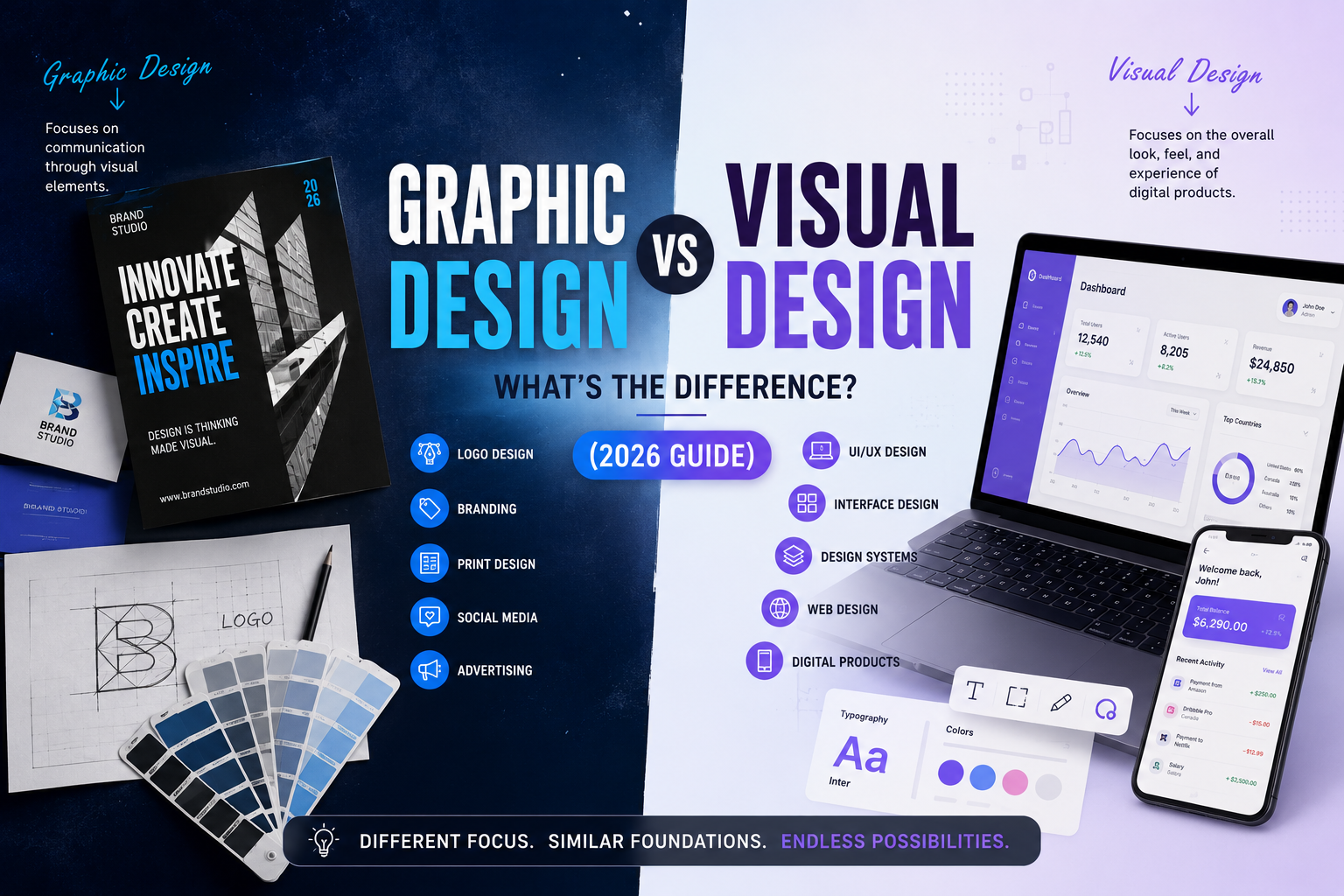
As the creative industry continues to evolve, the lines between design disciplines have become increasingly blurred.
Terms like Graphic Designer, Visual Designer, UI Designer, Brand Designer, and Product Designer are often used interchangeably in job descriptions and conversations.
This leaves many beginners asking an important question:
What's the difference between graphic design and visual design?
While both disciplines rely on creativity, typography, color, layout, and composition, they serve different purposes and solve different problems.
Understanding the distinction can help you choose the right career path, improve your skills, and communicate your value more effectively to employers and clients.
In this guide, we'll explore the key differences, similarities, required skills, career opportunities, and the role AI plays in both professions.
What Is Graphic Design?
Graphic design is the practice of creating visual communication to inform, persuade, educate, or inspire an audience.
Graphic designers focus on delivering a specific message through visual elements.
Typical projects include:
- Logo design
- Brand identity
- Posters
- Packaging
- Social media graphics
- Brochures
- Business cards
- Advertisements
- Print materials
- Marketing campaigns
The primary goal is communication.
Every design should help people understand something, remember a brand, or take action.
What Is Visual Design?
Visual design focuses on the overall appearance and consistency of digital experiences.
Rather than creating individual graphics, visual designers ensure that every screen, component, and interaction feels unified and intuitive.
Common projects include:
- Website interfaces
- Mobile app interfaces
- SaaS dashboards
- Landing pages
- Design systems
- Digital products
- Interactive experiences
Visual design combines branding with usability to create experiences that are both attractive and functional.
The Biggest Difference
The easiest way to understand the difference is this:
Graphic Design asks:
"How do we communicate this message?"
Visual Design asks:
"How should the entire experience look and feel?"
Graphic design often creates individual assets.
Visual design connects those assets into a cohesive user experience.
Skills Required for Graphic Designers
Successful graphic designers typically master:
- Typography
- Branding
- Logo design
- Color theory
- Print production
- Layout design
- Advertising design
- Packaging
- Marketing communication
- Visual storytelling
Strong communication skills are equally important because every design serves a business purpose.
Skills Required for Visual Designers
Visual designers build on many graphic design fundamentals while expanding into digital product design.
Key skills include:
- UI fundamentals
- Design systems
- Grid layouts
- Responsive design
- Accessibility
- Component libraries
- User-centered thinking
- Interface consistency
- Interaction awareness
- Visual hierarchy for digital products
Their work often supports developers, UX designers, and product teams.
Where the Two Roles Overlap
Graphic design and visual design share many foundational principles.
Both rely on:
- Typography
- Color
- Balance
- Contrast
- Hierarchy
- White space
- Composition
- Brand consistency
This is why many designers transition from graphic design into visual design over time.
A strong foundation in design principles benefits both careers.
How AI Is Changing Graphic Design
AI has transformed graphic design workflows by helping designers:
- Generate concepts
- Create illustrations
- Remove backgrounds
- Resize assets
- Produce marketing visuals
- Generate creative copy
- Build mood boards
These tools reduce production time and allow designers to focus on strategy and creative direction.
How AI Is Changing Visual Design
Visual designers also benefit from AI.
Modern AI tools can:
- Generate interface concepts
- Suggest layouts
- Create wireframes
- Produce icons
- Improve accessibility suggestions
- Generate design variations
- Organize design systems
However, AI cannot independently understand user behavior, business priorities, or long-term product strategy.
Human evaluation remains essential.
Which Career Should You Choose?
Choose Graphic Design if you enjoy:
- Branding
- Advertising
- Print design
- Marketing
- Logo creation
- Packaging
- Visual storytelling
Choose Visual Design if you enjoy:
- Websites
- Mobile apps
- Digital products
- Interfaces
- Design systems
- User-focused layouts
There is no universally better choice.
Many professionals develop skills in both areas.
Can One Person Do Both?
Absolutely.
In many startups and smaller businesses, one designer may handle:
- Brand identity
- Marketing graphics
- Website visuals
- Landing pages
- Social media
- Email campaigns
Learning both disciplines increases versatility and career opportunities.
Common Misconceptions
"Visual design is just graphic design for websites."
Not quite.
Visual design includes branding principles, but it also considers consistency across interfaces, digital products, and user interactions.
"Graphic design is only for print."
Modern graphic designers work extensively in digital environments, including social media, online advertising, websites, and digital campaigns.
"AI makes both roles unnecessary."
AI accelerates production.
It doesn't replace strategic thinking, creativity, communication, empathy, or collaboration.
The strongest designers use AI to improve efficiency—not to replace their expertise.
Future Opportunities in 2026
Demand remains strong for designers who combine creative skills with digital literacy.
Businesses increasingly value professionals who understand:
- Branding
- Marketing
- User behavior
- Accessibility
- AI-assisted workflows
- Cross-platform consistency
Designers who continue learning and adapting are well positioned for long-term success.
Frequently Asked Questions
Is graphic design the same as visual design?
No. Graphic design focuses on creating visual communication, while visual design focuses on the appearance and consistency of digital experiences.
Can a graphic designer become a visual designer?
Yes. Since both disciplines share many design fundamentals, graphic designers can expand into visual design by learning UI principles, responsive layouts, accessibility, and design systems.
Which career pays more?
Compensation depends on experience, industry, and location. Visual designers working on complex digital products may command higher salaries in some markets, while experienced branding and graphic design specialists can also earn highly competitive incomes.
Should I learn AI if I want to become a designer?
Yes. AI is becoming an important productivity tool. Learning how to use it responsibly alongside strong design fundamentals will help you stay competitive.
Final Thoughts
Graphic design and visual design are closely connected, but they solve different challenges. Graphic design is rooted in communication—helping brands express ideas through logos, campaigns, packaging, and marketing materials. Visual design expands that foundation into digital experiences, ensuring websites, apps, and products feel cohesive, intuitive, and visually engaging.
As AI continues to reshape creative workflows, the distinction between these roles becomes even more important. AI can generate assets and interface ideas quickly, but it cannot replace the strategic thinking, empathy, collaboration, and decision-making that professionals bring to every project.
Whether you choose graphic design, visual design, or build expertise in both, your long-term value will come from understanding people, solving real problems, and using technology to enhance—not replace—your creativity.
Comments 0
Join the Conversation